Himal Mandalia
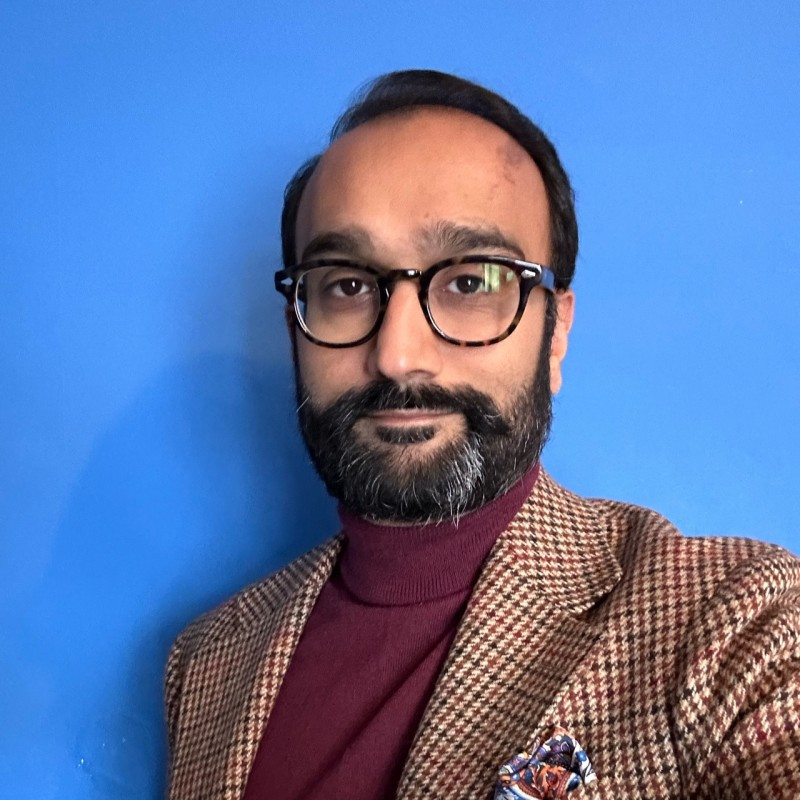
Reading ADHD Group have been celebrating active campaigners, activists and changemakers of the ADHD community from across the country. We’re excited to share this guest post from Himal Mandalia, ADHD UK Ambassador, UK Parliament ADHD Champion, former Head of Technology for GOV.UK, and founder of ADHD Pathfinding.
Growing up different
I was diagnosed with ADHD at the age of 44. It came as a complete surprise.
I’d actually been trying to get an autism assessment via Right to Choose, but was accidentally referred for ADHD instead. Out of curiosity, I went ahead. At the time, I didn’t really know what ADHD was.
Looking back, the signs were always there. I grew up in East London with two non-working parents in a council flat. My dad, who I now recognise as very clearly ADHD and autistic, spent all our money in the bookies. We often lived without gas or electricity. I wasn’t sent to school.
From the age of seven I’d sneak out in the early hours, roaming across London on solo adventures. Eventually my sister and I were taken into foster care. When my mum got custody of us, I couldn’t settle into school.
For most of my life I put my differences down to neglect and trauma. But those overlap with ADHD too.
Losing faith in myself
I left school without qualifications. Retail jobs came and went. I’d start projects or hobbies with enthusiasm and quickly burn out. I cycled through intense bursts of interest followed by long periods of collapse. This was the pattern of my life.
I got into university as a mature student, excelled in exams, but dropped out in the final year. That failure cemented a belief I’d carried for years: that I was unreliable, broken, not good enough.
But even in those lost years, I gathered skills. I’d taught myself to code from age 11. I read widely. I travelled when I could. Yet most of the time I lived at home with my mum, drifting between unemployment and short-lived jobs.
By 32, I couldn’t see a future. I decided to end my life. But before I did, I made one last push: put my coding projects online. All the unpaid or volunteer work I’d done. Within two weeks, recruiters came flooding in and I had my first software developer job. I was stunned.
Outward success, inner struggle
That first role lit a fire. A year in, I was contracting. I was well paid, had flexibility, and work that interested me. I moved into government digital teams, where user-centred design and experimentation shaped everything.
Over the next decade, my career soared. I advised senior civil servants, moved into strategic roles, and eventually became Head of Technology for GOV.UK during the pandemic. Less than a decade earlier, I’d only ever had minimum wage jobs or been on the dole.
From the outside, it looked like success. But inside, I was burning out. I masked constantly. I worked 80 hour weeks no one asked of me. I pushed myself to exhaustion.
When the pandemic eased, I was finished. Burnt out, hollow, and once again at the edge of despair. Just like I’d been ten years earlier, only now with money and status.
Still not enough. What was wrong with me?
I resigned. I left everything behind and wandered the world for 18 months. Many adventures but no answers. And even burnt out on my travels.
Diagnosis and healing
Still searching for meaning, I pursued an autism assessment. Instead, I got ADHD. That mistake turned out to be the missing piece.
Medication doesn’t work for everyone, but for me it was transformative. It gave me the stability to face what I’d been avoiding my whole life: my dad’s death, the grief I’d carried for 20 years, my childhood, the cycles of self-sabotage, the belief I was broken, the shame…
It all finally came out. 10 years of therapy had only resulted in chronicling my life. Now I was able to process, heal and move on.
I connected with my emotions, built stronger relationships with family and friends, and finally felt at peace with myself.
For the first time, I didn’t feel like I was living on fast-forward, chasing stimulation or avoiding pain. I could pause. Be present.
Finding purpose
Once I’d stabilised my own life, I wanted to make things better for others. I founded ADHD Pathfinding, a volunteer-led initiative working in the open to map the broken journeys people face in trying to access care, while drawing on our lived experience and backgrounds in public service.
We’re gathering stories from people with ADHD, alongside insights from clinicians, GPs and others. We want to shine a light on the system’s failures: the years-long waits, the shared care cliff-edges, the diagnoses which are redone.
We want to push for change by showing how this can be better. We’re part advocacy, part think tank, and part user-centred policy design.
We’ve lived this and we know how to make it better.
Our vision is simple:
A society where ADHD is understood, supported, and never a barrier to thriving.
Because rather than being a condition to treat, ADHD challenges us with a deeper question:
What kind of society do we want to be?
What real success means
From the outside, I once looked like I had everything: career, money, prestige. But success doesn’t fix ADHD.
Real success isn’t status. It isn’t constant productivity. It’s being able to feel safe. To pause. To live in the moment.
That’s what I want for everyone with ADHD. Not just survival, but the chance to thrive.
To simply just… be.


 Reading ADHD Group
Leave a comment